
Your Privacy Choices
As described in our Privacy Policy, we collect personal information from your interactions with us and our website, including through cookies and similar technologies. We may also share this personal information with third parties, including advertising partners. We do this in order to show you ads on other websites that are more relevant to your interests and for other reasons outlined in our privacy policy.
Sharing of personal information for targeted advertising based on your interaction on different websites may be considered "sales", "sharing", or "targeted advertising" under certain U.S. state privacy laws. Depending on where you live, you may have the right to opt out of these activities. If you would like to exercise this opt-out right, please follow the instructions below.
If you visit our website with the Global Privacy Control opt-out preference signal enabled, depending on where you are, we will treat this as a request to opt-out of activity that may be considered a “sale” or “sharing” of personal information or other uses that may be considered targeted advertising for the device and browser you used to visit our website.
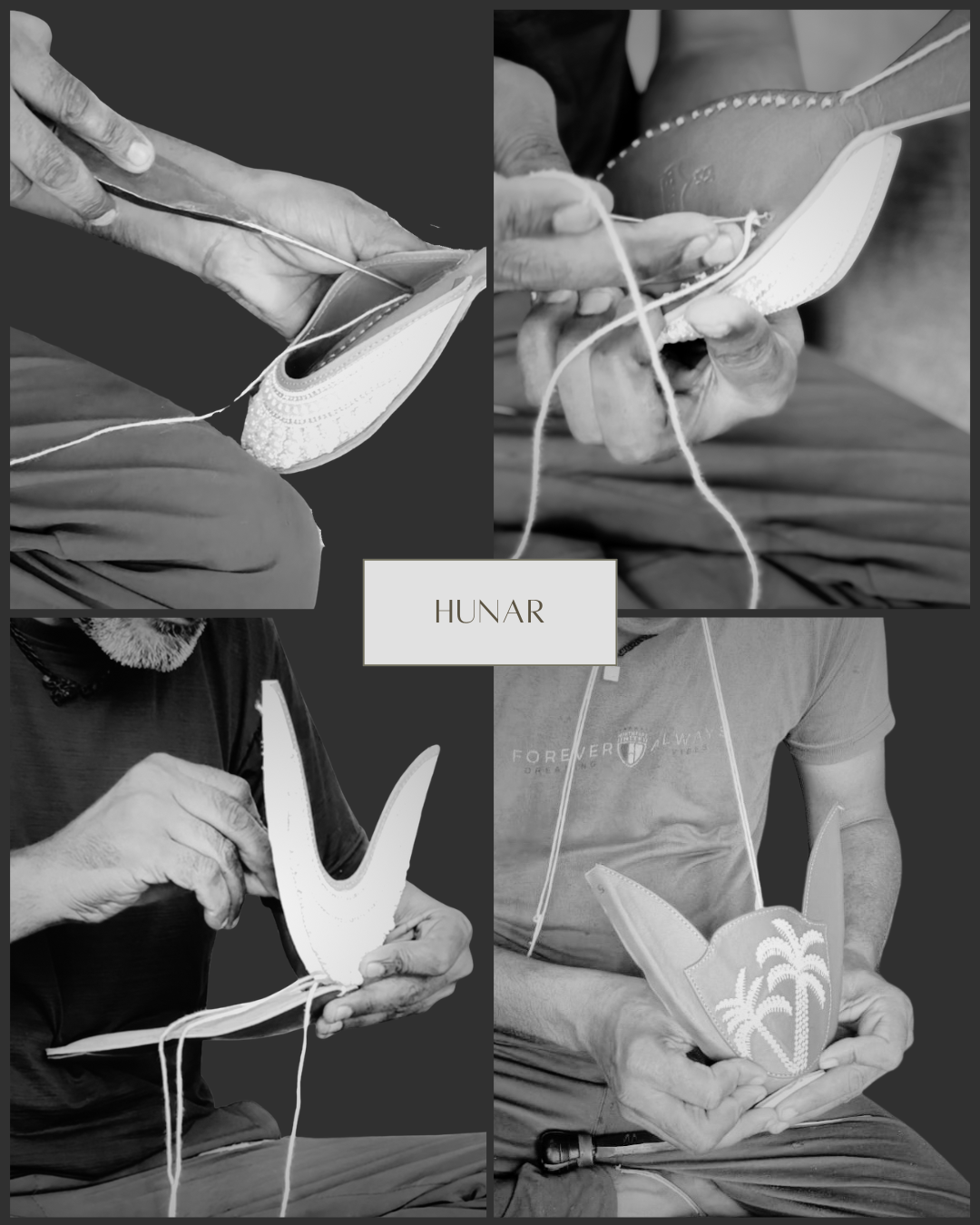
Origins of Juttis
A Jutti is a distinctive slip‑on shoe that dates back to the 12th century, when pointed toes were fashionable. During the Mughal era, slip‑on shoes with curved toes became popular at court and were often covered in gold and silver thread. Artisans from Rajasthan later migrated to Punjab, establishing workshops in cities like Patiala; Juttis were once status symbols for royalty.
Craft Process
Crafting a jutti is labor‑intensive. Families split tasks: tanners prepare hides, cutters shape pieces, and women embroider the uppers.
- Wooden templates guide patterns for the shoes.
- Layers of leather or synthetic sheet are glued and hammered together using tools.
- The upper, back and sole are hand‑stitched with thick cotton thread; a single shoe requires 200–400 stitches.
- Uppers are embellished with colorful threads, beads and mirrors, then polished and flattened under a heavy stone.